

Our History
Nearly a century of celebrating the performing arts in Newry and beyond.
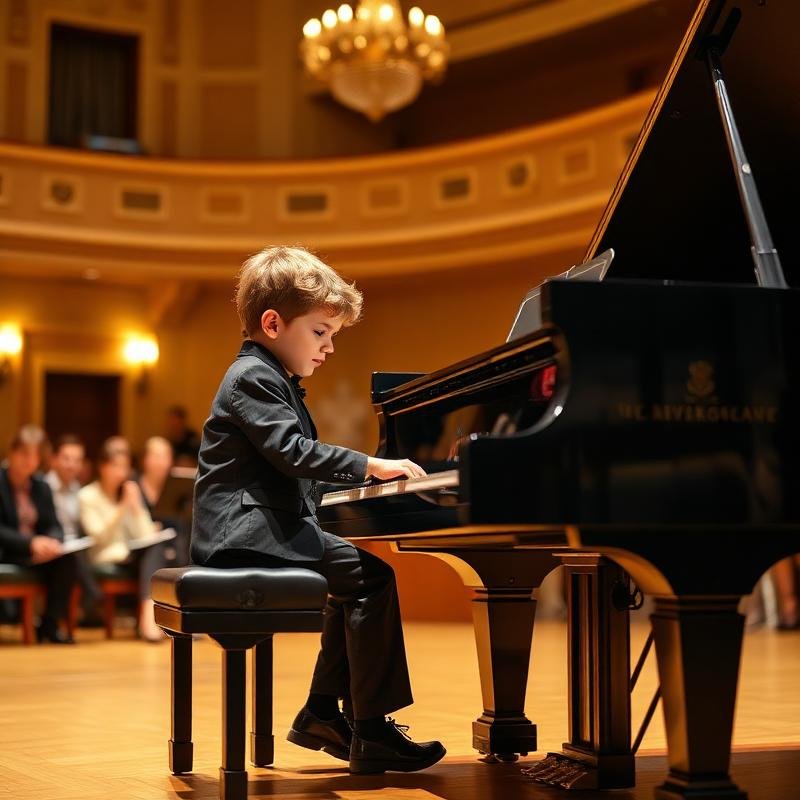
Festival Founded
Newry Musical Feis was established in Autumn 1928, with the first Feis opening at Newry Town Hall on 8th April 1929.
Rapid Growth
By 1936 there were ten days of competition, with entries increasing from across Ireland including Dublin.
Wartime Resilience
The Feis continued throughout World War II, with entries rising to 1,530 competitors by 1944.
21st Birthday
Newry Musical Feis celebrated its 21st birthday.
Silver Jubilee
The festival marked 25 years of promoting the performing arts.
The Troubles
Despite a bomb exploding near a venue during a children's class, 'the show must go on' — the Feis continued unbroken.
Golden Jubilee
50 years celebrated with displays of historical memorabilia compiled by founding member Mr Harry Heather.
Diamond Jubilee
60th anniversary marked with special crystal bowl awards across all three Sections.
Speech Section Expands
Speech & Drama divided into 'Open' and 'Schools' categories to accommodate growing numbers.
Ballet & Theatre Dance Added
A new Section for Ballet and Theatre Dance was added to the programme.
14,000 Performances
The Feis reached more than 14,000 adjudicated performances annually.
Pandemic Resilience
Virtual classes maintained continuity during Covid-19 lockdowns — the unbroken run continued.
Early Beginnings
Festivals providing opportunities for performance in Music, Dance and Speech first emerged in the British Isles during the 1870s. Organised competition was becoming increasingly popular in the sporting world, and the decade saw the beginnings of the Football Association (1873) and the Wimbledon Tennis Championships (1877). In Ireland the Irish Rugby Football Union was formed in 1880 and the Gaelic Athletic Association in 1884. This spirit of competition spilled over into the arts and local events sprang up spontaneously.
The first Feis Ceoil competitions were held in Dublin in 1897. Other developments included Ireland's first dancing Feis held in Macroom, Co Cork in 1899 and a Feis in Sligo which began in 1903. In 1904 an "Association of Competition Festivals" was established in England and by 1907 this had attracted more than 70 affiliated festivals.
In the north of Ireland many festivals were attracting interest. These included Newcastle Feis (1902), Belfast Musical Festival (1908), Coleraine Music Festival (1909) and Ballymena Festival (1916). The early 1920s saw the emergence of Portadown Festival Association (1922), Féis Dhoíre Cholmcílle (1922) and Carrickfergus Music Festival (1923). The festival movement continued to expand in the south of the island with the Father Mathew Feis being established in Cork in 1927.
It was against this background, and due to the inspiration of the editor of The Newry Reporter, Mr E.P. Northwood, with the backing of the newspaper's owner, Mr Edward Hodgett J.P., that Newry Musical Feis was established in Autumn 1928. An organising committee and officers were elected at an inaugural meeting held on 19th September 1928 and the first Feis opened at Newry Town Hall on 8th April 1929.
1929–1960
The first Feis in April 1929 offered three days of Music competitions and a fourth day divided into two sessions of Verse and one session of Folk Dancing. There were an estimated 925 competitors. Although most of the competitors were from Newry and other parts of counties Armagh and Down, a number came from Belfast and Dundalk.
The number of competitors continued to grow in the following years with interest increasing from other areas of Ireland including Dublin. By 1936 there were ten days of competition and each year music adjudicators spoke highly of the excellent standards being achieved across all disciplines.
Newry Musical Feis quickly developed strong foundations and an enviable reputation due to the exceptional efforts of two men: Mr Harry Heather and Mr P.J. Walker, who worked as joint General Secretaries from 1929–1937. Their unstinting efforts to obtain the services of the most respected adjudicators, tireless work in managing the rapid growth of the three Sections and constant presence in key roles for over thirty years, set a standard that inspired both those who worked alongside them and those who were destined to carry on the work.
In his closing remarks in 1939 the Music adjudicator, Mr Maurice Jacobson, said that "…the Newry Feis Executive was one of the best that could possibly be met anywhere…"
Also in 1939, ballet, based on Irish music, was presented for the first time in any festival outside Dublin. The Folk Dance adjudicators, Dominick O'Connor (1939) and Tom Farrelly (1940, 1941) were impressed by the quality of work, and the high standards attracted much interest from the local press.
Other classes which achieved high standards during these years were the amateur dramatic productions. In 1946, the verse adjudicator, Marjorie Lyon, stressed the outstanding quality of these productions and many of the stars, including Ethel Fitzpatrick, Kathleen O'Donnell, Irwin Major and Michael Mathers, had been Newry Feis participants throughout their childhood.
Two significant milestones were reached during the post-war years: 1949 saw 21st birthday celebrations and in 1953, Newry Musical Feis celebrated its Silver Jubilee.
Even though the 1950s saw a continued increase in the number of performers, there was growing concern among Feis members and in the local press about the lack of local public support and smaller audiences.
1961–1988
The early 1960s witnessed significant change in the members of the committee, several of whom had held office from the earliest days of the Feis. In the mid-1950s, the Rev. J.P. Burke took over as President from Mr David Ferris and, in 1961, Mrs Alma Brown became General Secretary and Music Secretary. These key roles had been occupied by Mr Harry Heather since the original committee was elected in 1928. In the same year, Sean O'Driscoll became Section Secretary for Irish Dance, taking over from P.J. Walker who had held the position from 1928.
In 1967 the Irish Dancing Section lost its long-serving accompanist when Jack Conway retired after 36 years of service. The Feis programme for that year carried a special tribute to Mr Conway, commenting on his "unfailing good humour, even after a fourteen-hour stint of playing".
The early 1970s also witnessed several significant departures and arrivals. After serving as Assistant Treasurer and Treasurer for 26 years, Mr Kevin Neary was elected President in 1971, an office he continued to hold for another 30 years. During this period, August Toremans, organist at St. Catherine's Church, Newry and a highly respected local conductor and music teacher, became an accompanist to the Music Section.
Newry Musical Feis celebrated its Golden Jubilee in 1978 and the occasion provided an opportunity to celebrate what had been achieved. Key moments from the period 1929–1960, captured in a scrapbook which had been partly compiled by Mr Heather, were on display in a newly bound format. It was a chance for all to reflect on what had been achieved and marvel at the excellent opportunities that had been offered to the young people of the area.
In 1988, the Diamond Jubilee was marked by the award of a special crystal bowl to the overall prize winner in each of the three Sections: Speech and Drama (Judith Devine), Music (Judith McGinn) and Irish Dance (Gary Moan).
1989–2020
The development and success of Newry Musical Feis over the decades would not have been possible without the dedication and loyalty of many of its members. A Presentation Dinner on January 24th, 1997, celebrated two long-serving members of the Feis: Mr Kevin Neary with 50 years of unbroken service as Treasurer and President and Mrs Alma Brown with 35 years in the roles of Music Secretary and General Secretary. In September 2002 a dinner was also held in honour of Miss Ethel Fitzpatrick who became President that year.
The contribution of people associated with the Feis was once again the focus of the 70th anniversary celebrations in 1998. This was marked by the production of a booklet of personal reflections edited by the Feis General Secretary/Administrator, Mary Goss. Entitled Suddenly I Knew That This Was for Me!, the booklet contained memories of past competitors, teachers and their relatives.
Newry Musical Feis greeted the dawn of the 21st century with continued growth and development. In 2001 the Speech and Drama Section was divided into 'Open' & 'Schools' categories to accommodate an increase in competitors, and, in 2002, a Section for Ballet and Theatre Dance was added to the already extensive programme.
The 75th Feis in 2003 saw the revival of a great tradition – the Prize-winners' Concert. With Miss Ethel Fitzpatrick in the role of compère, a dazzling array of talent representing all five Sections performed for a capacity Town Hall audience. Miss Fitzpatrick brought the audience a wealth of memories and insights from a lifetime of Feis involvement as performer, teacher, Committee member, Chairperson and President.
By 2007 the Feis was facilitating more than 14,000 performances annually. This level of engagement with participants of all ages continued until the limitations caused by the Covid-19 lockdown in March 2020 called for very substantial readjustments designed to encourage continued involvement with as many performers as possible.
Times of Crisis: An Unbroken Run
The War Years 1939–1945
During World War II, Newry Musical Feis continued to be held each Spring in Newry Town Hall. In his opening speech at the 1941 Feis, Mr David Ferris, President and Chairman, said: "In these terrible days of world upheaval there are many difficulties to be encountered… but in the face of all this the Committee decided to carry on…"
Entries from competitors continued to rise during the war years: 1,400 in 1943 and 1,530 in 1944 with 4,000 competitions. 1944 also saw the highest sale of tickets.
One way in which the War did impact on the Feis was through the restrictions on travel by civilians. In 1944 the Music and Verse adjudicators were unable to travel to Newry, and a new group of adjudicators had to be secured within Ireland a few days before the opening of the Feis.
The Troubles: A Spirit of Co-operation
Newry Town Hall was substantially damaged by an arson attack on 18th February 1972; this meant that the Feis could not run in its usual venue. With over 6,000 entries received, two alternative venues – Downshire Road Presbyterian Church Hall and St Colman's Parochial Hall – were secured.
However, further disruption occurred when a bomb exploded in Kildare Street on 28th April 1972 less than 100 yards from St. Colman's Hall where an under-10 verse class was taking place. After the children had been calmed, "…in the true tradition of the stage, parents and organisers decided that the show must go on".
Pandemic Disruption 2020–2022
The determination to overcome adversity — and keep things as close to normal as possible for those wishing to perform — which had seen the Feis maintain an unbroken run throughout the Second World War and The Troubles — emerged again as soon as the first pandemic lockdown began on 23rd March 2020. By that time ten days of Feis 2020 performances in Irish Dance and Music had been completed. The financial cost of cancelling the remainder of the Feis was considerable, but plans for a virtual festival were soon under way.
With virtual Classes being offered in Music, Speech (Open) and Traditional Irish Music — and adjudicators willing to carry out their work online, continuity was possible for some disciplines. By 2022 all Sections were back — albeit with fewer Classes, particularly where teachers were helping performers taking part in school-based group activities to build up standards following substantial school closures. The new familiarity with virtual conferencing software meant that Choral Speaking Classes in Feis 2022 were adjudicated live via Zoom. The run remained unbroken…